For more than a quarter-century, the UC San Diego Qualcomm Institute (QI) has evolved from a bold statewide experiment into an engine for innovation in immersive technologies, wireless communication, digital culture, medical advances and workforce development. Through its interdisciplinary work, QI continues to lay the foundation for future scientific, creative, educational and entrepreneurial advances. Below are a few highlights from the years since QI’s beginnings.
2000

A Statewide Moonshot
California awards funding to launch CalIT2 as part of the new California Institutes for Science & Innovation. The collaboration between UC San Diego and UC Irvine (later expanded to include UC Riverside) aims to tackle large-scale challenges of the 21st century and develop the state’s high-tech workforce.
2002
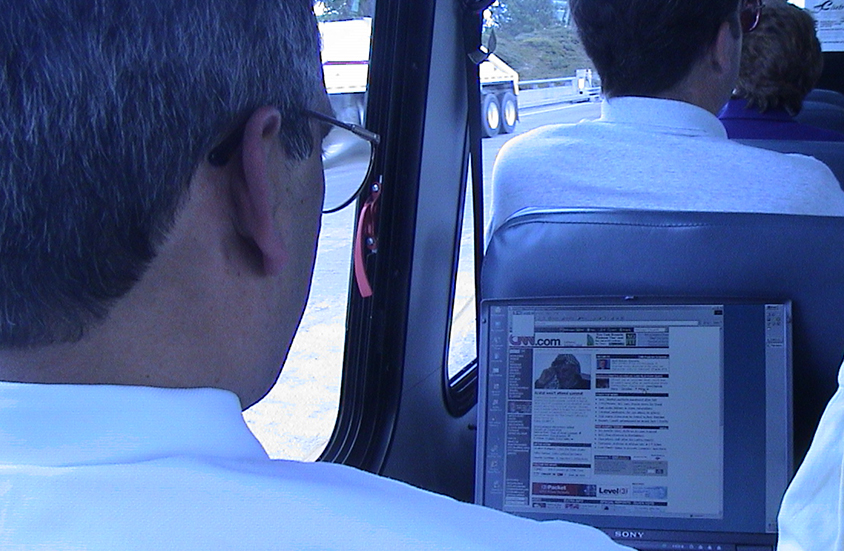
The Wireless Future Takes Off
QI’s prototypes, tested on campus shuttles, establish mobile Wi-Fi communication for medical consultation and emergency response systems—laying the groundwork for today’s on-the-go streaming culture.
2003

Major Federal Grants Accelerate Growth
Large National Science Foundation (NSF), National Institutes of Health and Department of Defense awards (e.g., crisis-response systems, microbial analysis, telemedicine, distributed research platforms) scale the institute’s capabilities.
2005
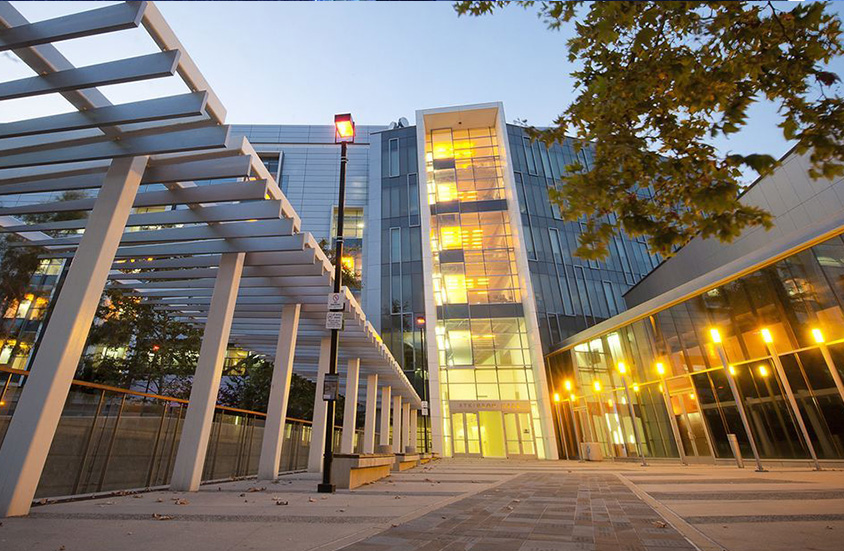
Doors Open: Atkinson Hall Debuts (and Draws Global Attention)
Atkinson Hall opens its 215,000-square-foot research facility, which includes the Nano3 Cleanroom and other advanced specialty labs. The building soon receives major design honors, including the prestigious Grand Orchid Award. Its technology also wows the international community with the world’s first real-time, international transmission of super high-definition 4K digital video, ushering in the future of videoconferencing, scientific visualization and digital cinema.
2007

Listening to the Future
QI launches its Composer-in-Residence program, welcoming visionary composer Roger Reynolds as its inaugural resident artist. The appointment marks a commitment to blending engineering, science and experimental music—laying the groundwork for collaborations that would span performance, spatial audio research, digital media and immersive sound design. Subsequent composers-in-residence will include luminaries Rand Steiger, Lei Liang and Miller Puckette.
2008
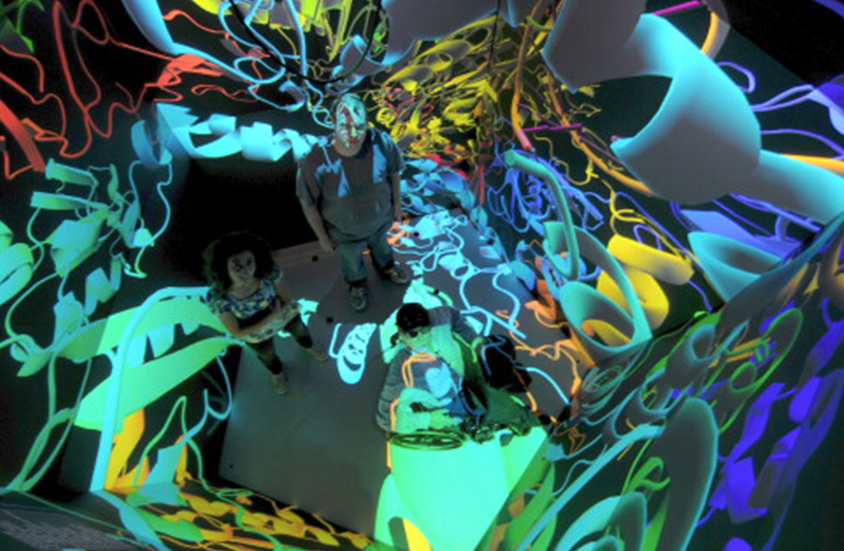
Visualization Goes Broad and Immersive
The 3D immersive StarCAVE visualization platform sets new standards; NexCAVE and later SunCAVE establish QI as an international leader in visualization. High-tech visualization tools are also applied to cultural touch-points, such as searches for a lost DaVinci mural and the tomb of Ghengis Khan, and emergency response systems. On the creative front, the art gallery now known as Gallery QI opens.
2009
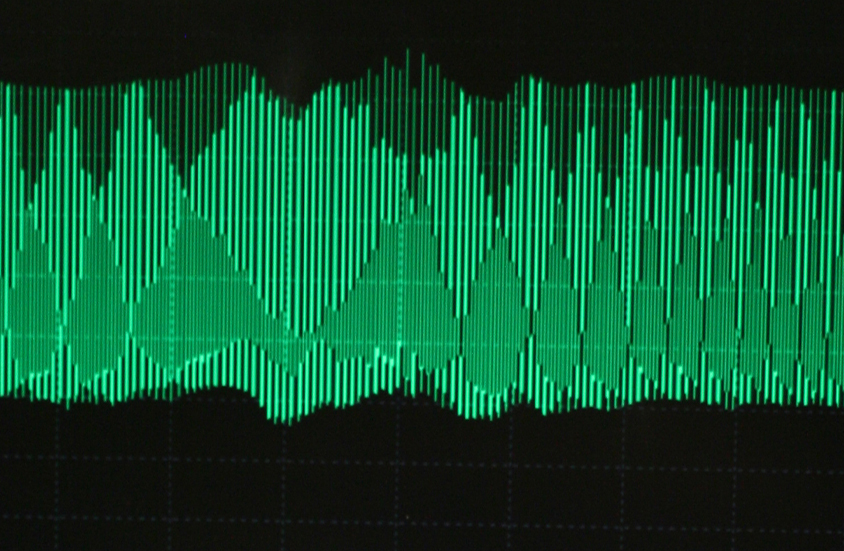
QI Teams Shatter Records
A QI team achieves world-record speeds for real-time signal processing, bridging the gap between transmission and processing speeds; the same team later sets records for the maximum power and distance at which signals can travel through optical fibers. In other QI specialty labs, Nano3 will soon build the smallest room-temperature laser ever created.
2010
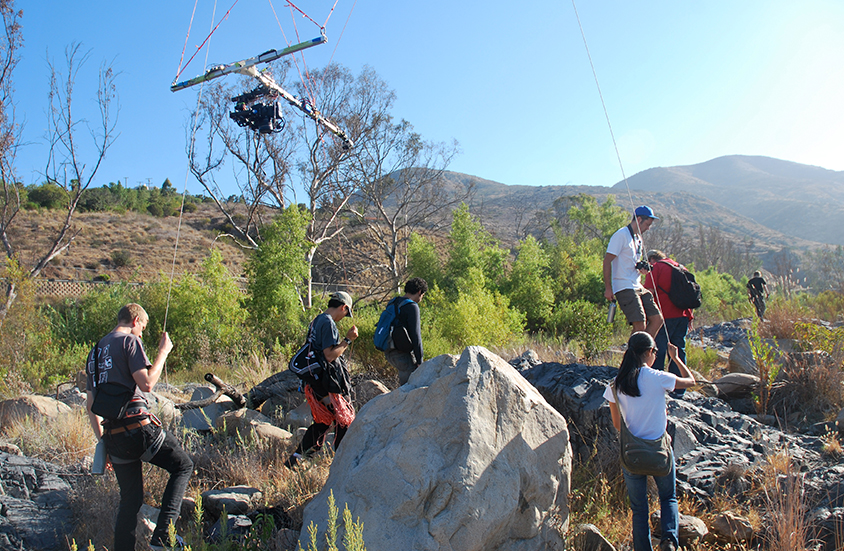
Engineering Meets the Real World
QI scientists launch the Engineers for Exploration (E4E) program, giving students hands-on experience building technologies for global field science. The year also marks the beginning of a long-running traffic safety portfolio, later formalized as TREDS—extending the institute’s research mission into public education, behavioral research and community safety statewide.
2013
A New Name: The Qualcomm Institute
CalIT2 at UC San Diego is renamed the UC San Diego Qualcomm Institute (QI), in recognition of tech company Qualcomm Inc.’s philanthropic contributions, which totaled nearly $26 million between 2000 and 2012. The same year, the Initiative for Digital Exploration of Arts and Sciences (IDEAS) program was launched to host events by interdisciplinary performing, visual, and literary-artists, as well as engineers and scientists.
2015
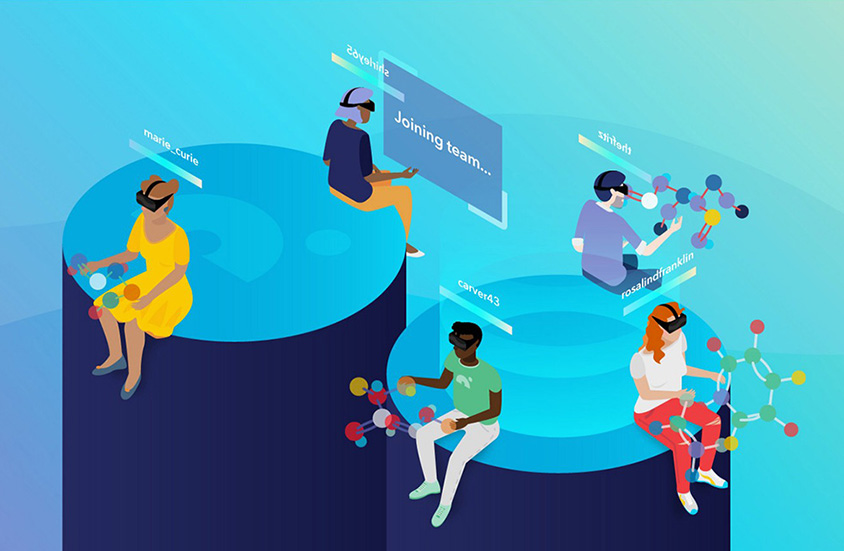
Infrastructure and Innovation Scale Up
The QI Innovation Space opens, offering startups a launchpad inside Atkinson Hall, where early residents include the global education nonprofit Learning Equality and Virbela, a virtual world for work, education and events. Meanwhile, the Pacific Research Platform launches, connecting campuses at unprecedented speeds and laying the groundwork for the current National Research Platform, while Nano3 joins the NSF’s National Nanotechnology Coordinated Infrastructure.
2016-17

Diving into Deep Time
Building on several years of work, QI teams lead global digital-archaeology initiatives. The Center for Cyber-Archaeology and Sustainability unveils a 3-D “CAVEkiosk,” documenting ancient land/sea sites in the Eastern Mediterranean, the focus of the center’s investigations. The Cultural Heritage Engineering Initiative publishes groundbreaking research on “Naia,” a 13,000-year-old skeleton found in an underwater cave (above) in the Yucatán, where the group will later excavate the pelvis of a prehistoric sloth.
2020
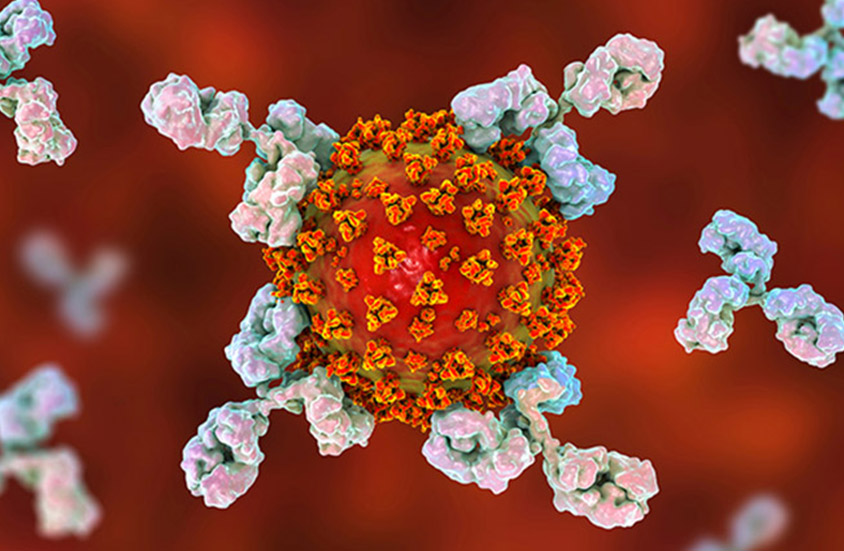
A Pandemic Pivot
QI people and programs contribute epidemic modeling, telemedicine support, 3D printing capabilities, ventilator innovation and remote collaboration tools to the broader COVID-19 response.
2021
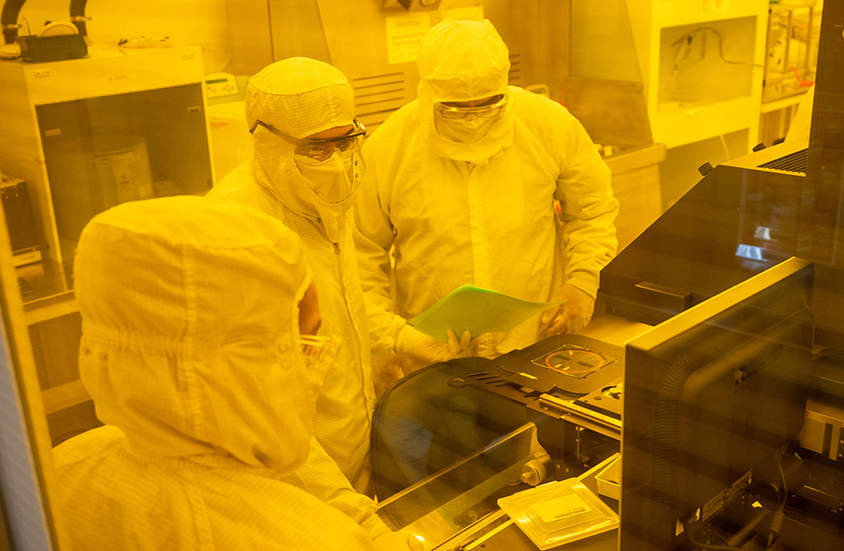
High-Tech Workforce Pipeline
The State of California invests in workforce development at QI, activating hands-on internships in nanotechnology, audio tech, neurodiversity in tech, serious games, healthcare app development and quantum computing.
2023
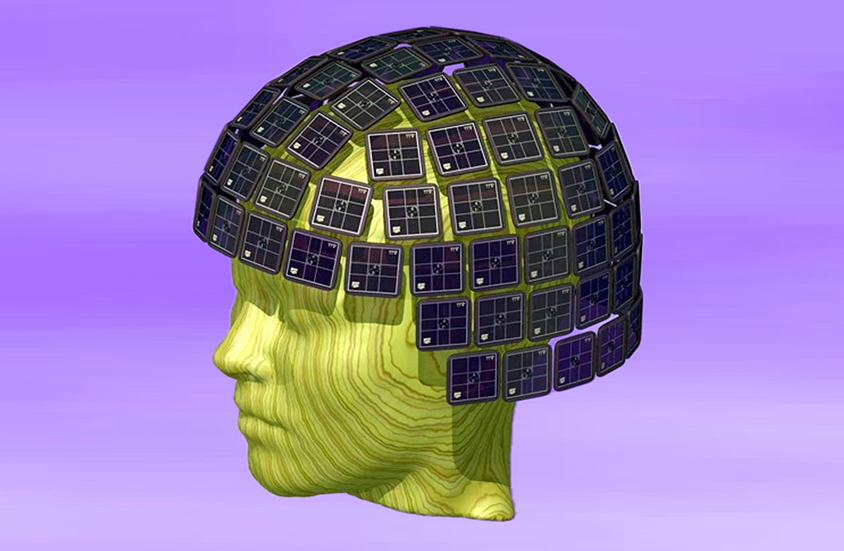
Advanced Brain Imaging Arrives
The MEG (Magnetoencephalography) Center officially relocates to Atkinson Hall, upgrading the region’s neuroscience research and patient care with state-of-the-art functional imaging technology.
2024
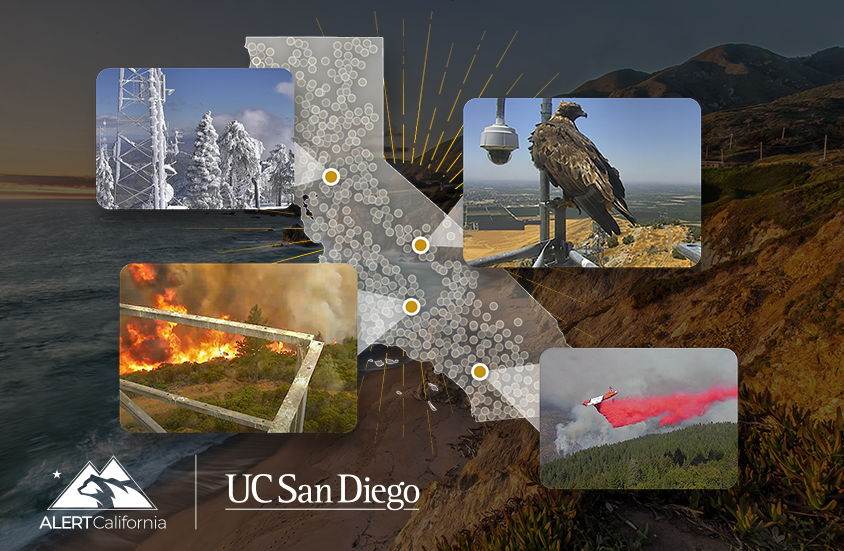
A Smarter Defense Against Wildfire
Following years of QI contributions to emergency response, the award-winning ALERTCalifornia partnership continues to grow, adding new sensors, smarter analytics and broader statewide access to its real-time environmental intelligence platform. With expanded data tools and AI-assisted wildfire detection, the system plays an increasing role in early response to environmental threats.
2025 and more
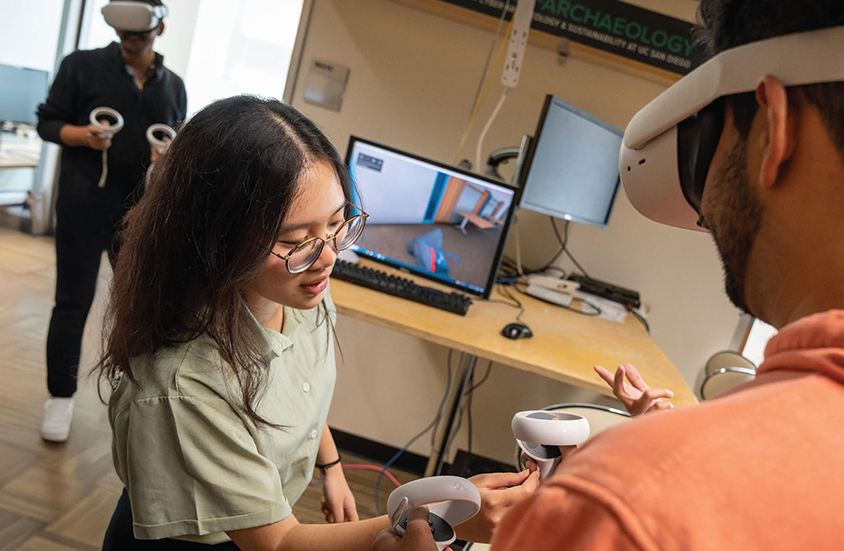
Inventing Tomorrow
QI continues to embrace its role as an innovation hub, advancing far-reaching projects in climate resilience, digital culture, neuroscience, AI and workforce development—ensuring California remains at the forefront of research, creativity and public impact.